Donating Isn't a Magic Eraser
If you wouldn't buy it in the condition it's in right now, someone else doesn't want it either.
That's the hard truth I find myself repeating to clients (and honestly, to myself) more often than I'd like. We fill a bag with things we no longer want, drop it at a donation center, and feel the warm glow of having done something good. But too often, what we're donating isn't a gift to someone else — it's just guilt, outsourced.
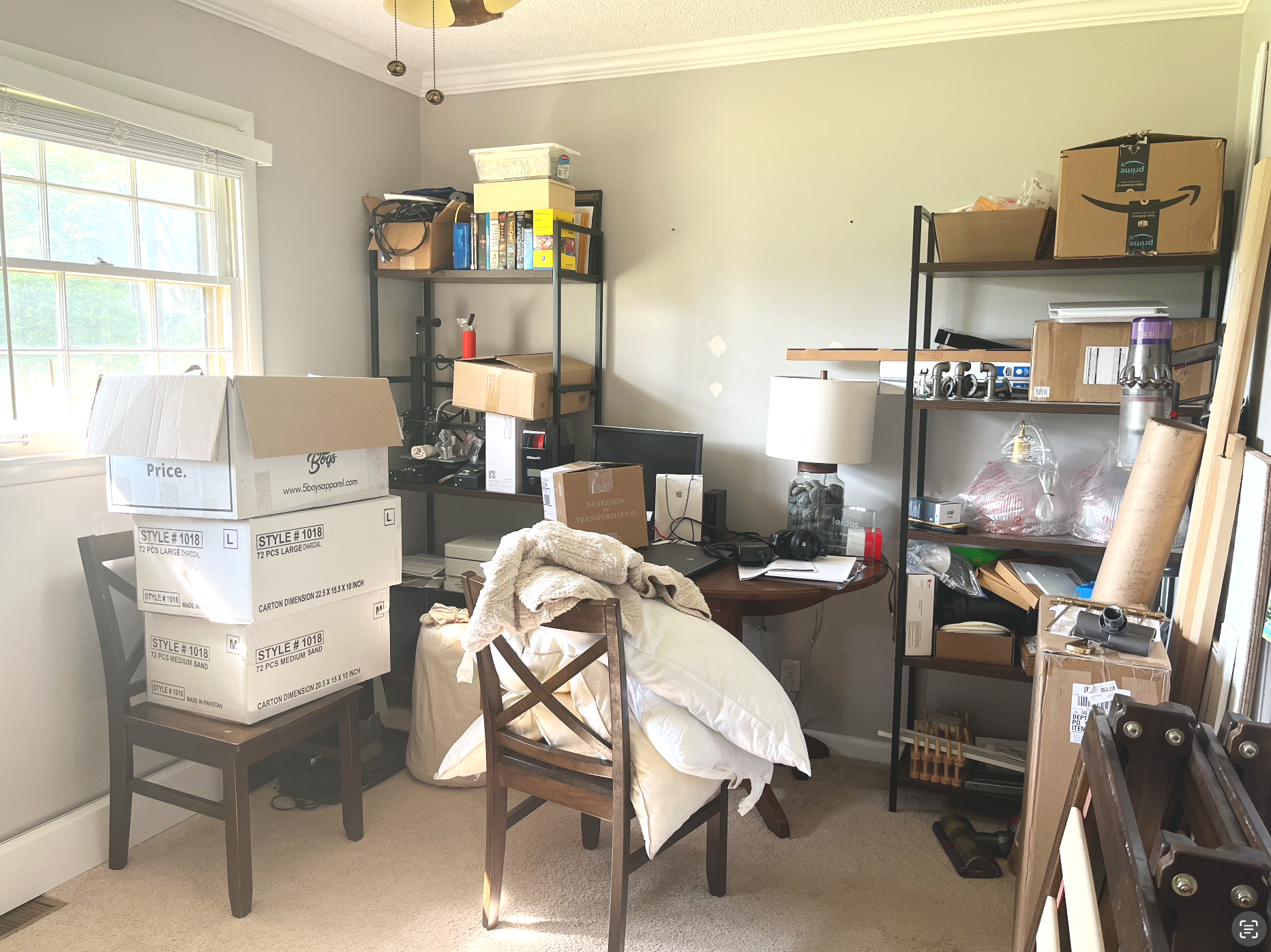
my home office space a few years back in need of an intentional decluttering session
The stuff you want to donate is probably garbage
That sounds harsh, I know. But think about it honestly: that shirt with the stain you kept meaning to treat. The toy with the missing piece. The lamp that hasn't worked right in a year. Somebody would have loved these things — when they were new, undamaged, and clean. Not now.
Donation centers are not disposal services. They're staffed by volunteers who have to sort, evaluate, clean, and price every single item that comes through the door before it can even make it to the sales floor. When we hand off items in poor condition, we're not being generous — we're quietly asking someone else to do our dirty work, or more often, we're just adding to what ends up in a landfill anyway, except now with extra steps.
Real intentionality doesn't end at checkout
This is the piece that gets left out of most decluttering conversations. We talk a lot about buying intentionally — do I need this, do I love it, does it align with my values. But intentional spending isn't just about the moment of purchase. It's about the entire life cycle of the item: how you'll use it, how you'll care for it, and — this is the part we conveniently forget — how you'll eventually let it go.
So here's the practice I want to offer you: before your next purchase, pause and ask yourself one question.
"How do I plan to dispose of this when I'm done with it?"
If the honest answer is "I don't know" or "I'll figure it out later," sit with that for a second. Because "later" is exactly how closets end up stuffed with things nobody wants, and how donation centers end up drowning in items that go straight to the dumpster behind the store.
What to do with what you already have
If you're looking around right now at a pile of stuff you were planning to donate, here's the more compassionate — and more honest — path forward:
Sort with real eyes. Is this something you'd be glad to find on a shelf yourself? If not, it's not a donation, it's trash.
It's okay to throw it away. This time, let it go. You don't have to fix or clean every item before you can release it. Sometimes the kindest thing you can do for an overwhelmed donation center is to skip it entirely.
Build the habit going forward. Next time you're tempted to buy something, add "end of life" to your mental checklist right alongside "do I need this" and "can I afford this."
The responsibility is part of the ownership
Owning something isn't just enjoying it while it's useful to you. It's also being responsible for what happens to it afterward — whether that's caring for it well enough that it can be passed on, or being willing to dispose of it properly yourself.
If you're not comfortable taking on that responsibility, that's useful information. It might mean you're not ready to bring that item into your life in the first place.
That's not a guilt trip. It's just what truly intentional living looks like — all the way through.
Lauren Hooper is a Financial Life Coach and founder of The Minimalist Wallet, based in Madison, AL, helping clients build values-aligned relationships with money — in Huntsville, North Alabama, and virtually nationwide.