What Values-Aligned Spending Looks Like in Madison, Alabama
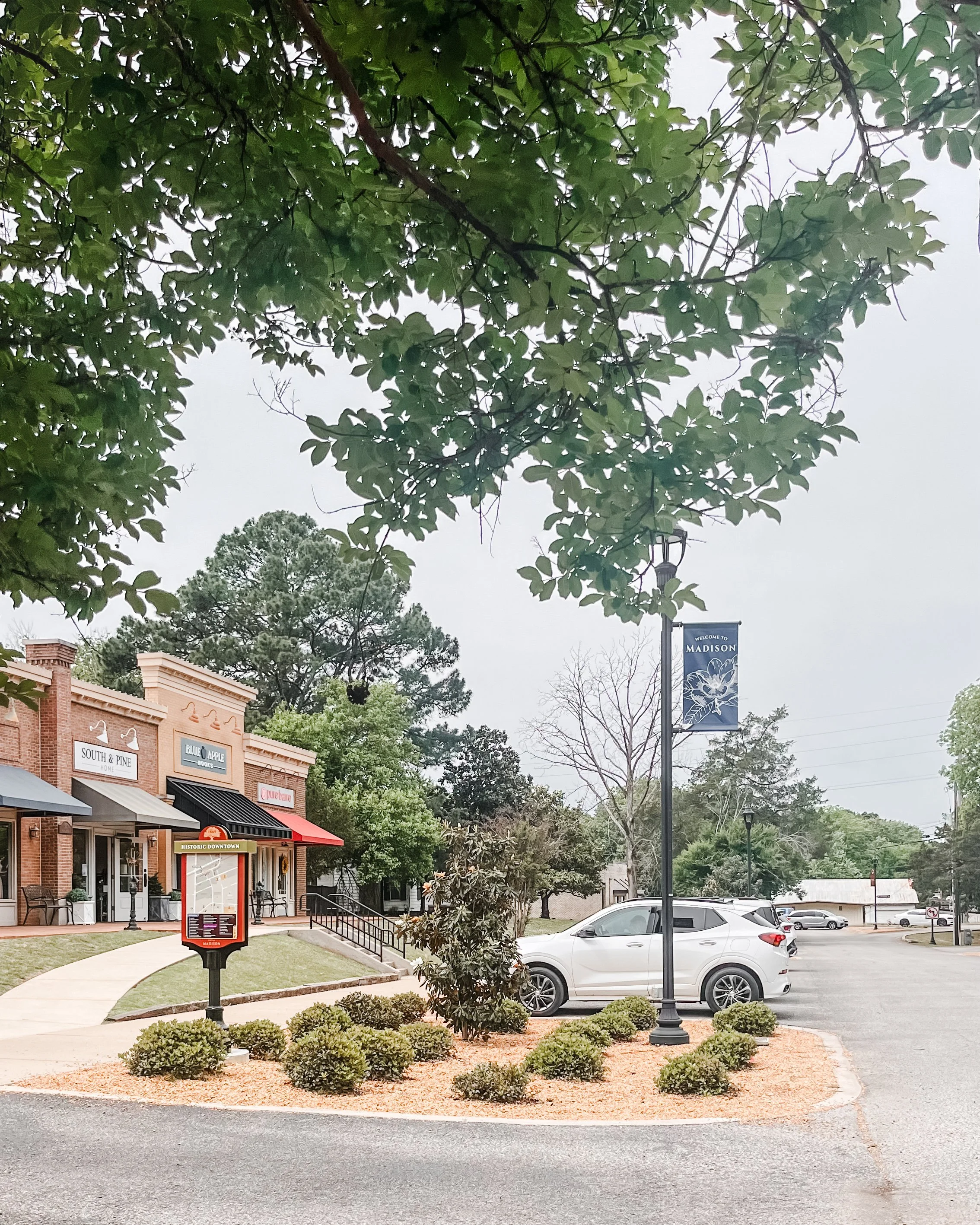
a gorgeous day for a walk down Main Street in Madison, Alabama
The Problem With How We Usually Talk About Money
Most financial advice treats spending as a math problem. Cut this, optimize that, hit this savings rate by this age. And to be clear — the math matters. But somewhere along the way, personal finance became almost entirely about restriction, and almost never about direction.
Nobody ever asks: what are you actually spending your resources on, and does it reflect what you say matters to you?
That question is a lot more uncomfortable than "did you stay under budget this month." It's also a lot more useful.
What Values-Aligned Spending Actually Means
Values-aligned spending is the practice of directing your resources — and that means more than money; it means your time, your attention, and your energy, too — toward the things you'd actually say matter to you if someone asked.
It's not about spending less. It's not about spending more. It's about spending on purpose.
Here's what that looked like for me last week, in a completely ordinary way: I spent a lovely hour walking historic downtown Madison, Alabama, popping into shops and talking to the many familiar faces I ran into — including five female business owners. Six, if you count my boss, who I texted about using the studio to learn my choreography for the next day's class. I can actually made it in…time blindness always has me thinking errands will take less time than they actually do.
But I'm not complaining. Knowing, working with, and supporting the people where I live enough that a walk down Main Street feels as familiar as a walk through my own living room? That's a pretty fantastic feeling. Community is high on my values list, so spending my resources on it — time, money, and attention — gives me a lot in return.
And it doesn’t require a lot from me in return. I didn’t drop hundreds of dollars on things I didn't need; I bought dishwasher & laundry detergent from the Refinery at Lemon & Lavender. I didn't go out of my way — I was on that side of town for my daughter’s soccer practice. But I did choose to spend an hour specifically in my slice of North Alabama with a purpose.
Why This Matters More Than a Budget Line Item
A budget tells you where your money went. It doesn't tell you whether that reflects what you care about. You can be perfectly "on budget" and still feel like your life is happening to you instead of being built by you.
That gap — between what you say your values are and where your resources actually go — is usually invisible until you start paying attention to it. Once you do, it's hard to unsee.
Values-aligned spending closes that gap. Not through more restriction, but through more intention.
Is “Community” One of Your Budget Categories?
You won't find often find “community" as a line item in most budgeting apps which is why most people never think about investing into theirs beyond a donation to a charity around the holidays. Values-aligned spending doesn't always fit neatly into pre-built categories, because it's not really about what you're buying — it's about why.
An hour downtown isn't a "shopping" expense. It's an investment in belonging. A coffee at a local Madison shop instead of a delivery app isn't just $8 — it's a small, repeated vote for the kind of neighborhood you want to live in, and for the small businesses that make North Alabama towns like Madison, Huntsville, and the surrounding area feel distinct.
It's Built From Small, Unglamorous Choices
This is the part people miss. Values-aligned spending rarely looks impressive in the moment. It's:
Choosing the local shop over the convenience of an app
Stopping to talk instead of rushing past someone you know
Spending an hour on a walk that could have gone to a dozen other things
Individually, none of these are remarkable. Add them up over weeks and months, though, and they become the difference between a life that just happens to you and one that's actually built around what you say you care about.
The Return Isn't Always Financial
This is where values-aligned spending departs most sharply from traditional financial advice. The "return" on spending an hour building community isn't going to show up on a net worth statement. It shows up as familiarity with your own city. As five — or six — friendly faces on a Thursday evening. As a sense that where you live is yours, not just a place you happen to be.
That's a real return. It's just not one most financial planning tools are built to measure.
How to Start Spending in Alignment With Your Values in North Alabama
If this resonates but feels abstract, here's where to start:
Name your values, specifically. Not "family" and "health" in the abstract — get concrete. What does valuing community actually look like on a Thursday in Madison?
Track where your time, money, and attention already go for one week. Not to judge it — just to see it clearly.
Look for the gap. Where does your calendar or your bank statement contradict what you'd say matters to you?
Pick one small, repeatable choice. Not a total overhaul — one walk down Main Street, one purchase from a local Madison shop, one person you stop to talk with instead of a quick wave.
Notice the return. Not the dollar return — the feeling. That's the data point that keeps this sustainable.
Why This Matters for Madison, Alabama Specifically
Madison sits in one of the fastest-growing areas of North Alabama, alongside Huntsville and the greater Tennessee Valley. Growth can be good for a local economy, but it can also make a place start to feel homogenous — the same indistinct gray buildings, the same bright chain store logos, and everyone with their eyes on their phone.
Choosing to spend time, money, and attention locally is one small way of pushing back on that. It's not about rejecting growth — it's about making sure your community isn’t just a resource for large corporations to extract value from in terms of resources (both people and things) before moving on after everything that drew people to Madison and North Alabama in the first place leaves with them.
The Bottom Line
Values-aligned spending isn't a budgeting technique. It's a lens. It asks you to look at your time, your money, and your attention and ask a simple question: does this reflect what I actually care about?
Some weeks, the answer will be an hour in downtown Madison, Alabama, five familiar faces, and not learning your choreography for work the next day until later that evening. That’s not a failure to be efficient (although I do love efficiency). That’s embracing all the other values - beauty, community, sustainability, and trustworthiness - that make your [my] life great.
Looking for support building a spending life that actually reflects your values? Learn more about financial life coaching in Madison, AL designed around intentional, values-aligned living.